I Was Raised in a Religious Cult, Here’s What It Taught Me About Visibility
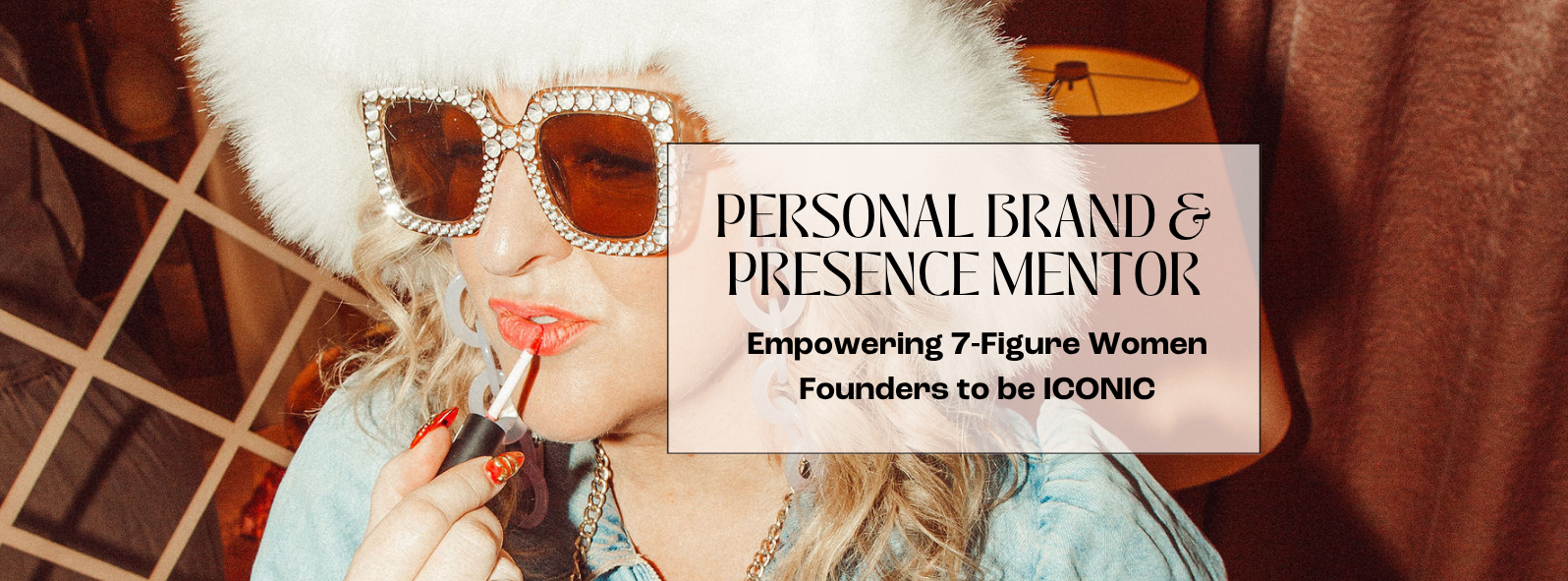
By Abigail Rebecca | CEO Personal Brand & Presence Mentor
I was raised in a religious cult. I was born third generation into the Jehovah’s Witnesses organisation and left when I was 16. I have strong views about the association and the way it controls its members, particularly women, and I have no desire to advocate for it.
But with almost 30 years of distance, and a decade of building my own business, I can look back at that upbringing through a very different lens. Because for an organisation whose members routinely face rejection, ridicule and doors being slammed in their faces, Jehovah’s Witnesses are extraordinarily effective at getting their message heard.
I know because I spent the first 16 years of my life inside that world. From a very young age, I was taken door to door with my parents. We knocked on strangers’ doors, offered magazines and talked about something the adults around me believed in completely. People said no, ignored us, slammed doors in our faces and very often, shouted abuse. Then we walked to the next door and started again.
Looking back at that experience now, through the eyes of a woman who has spent the past decade building a business and becoming increasingly visible through speaking, content and my own personal brand, I can see some fascinating lessons in it. Especially for the successful woman whose business has become better known than she has.
Because becoming more visible in your own right requires something from you. It asks you to back what you believe, keep expressing your ideas when they are challenged or ignored, and develop the capacity to remain visible when the response isn’t immediate.
Here are three things my Jehovah’s Witness upbringing taught me about that.
1. How deeply do you believe in what you have to say?
Jehovah’s Witnesses believe in their message deeply. I have my own views about the organisation and its practices, but I also grew up surrounded by individual people who sincerely believed they were helping others. That conviction made them willing to talk about their beliefs repeatedly, publicly and in situations where rejection was highly likely.
There is something here worth considering when you are building greater recognition around your own name. You may already have a highly successful business, with evidence of your expertise, clients who value your work and years of experience behind you. Yet becoming the visible woman associated with that success can expose a completely different layer of self-doubt.
You might find yourself wondering whether you really want to say what you’re thinking publicly, whether you know enough to have an opinion on something, what your peers will think or whether somebody else has already said it better. You can be extraordinarily accomplished and still find yourself editing the very perspective that could make you recognisable.
That matters because a powerful personal brand cannot be built entirely from safe observations. People need to discover what you believe and hear your perspective often enough to associate your name with it. You also need enough self-trust to keep expressing those ideas without requiring universal agreement.
So there is a question worth sitting with: What do you believe strongly enough that you are willing to become known for saying it?
Your answer can reveal far more about your personal brand than another beautifully designed set of brand guidelines ever will.
2. What happens to your visibility when someone says no?
One of the clearest memories I have from going door to door is what happened after someone rejected us. Someone could slam the door in our faces and my parents would simply walk to the next house and knock again. As a child, I hated it. As an entrepreneur, I can see the lesson.
Greater visibility inevitably brings more opportunities for people to say no. A podcast doesn’t invite you, a conference doesn’t select you or a piece of content you thought was brilliant receives very little attention. Maybe a potential client decides against working with you.
None of those experiences determine the value of your ideas, but they can affect how willing you are to keep putting those ideas into the world. I find this particularly interesting for successful women because you may be accustomed to operating in an environment where you are already respected. Your business has authority, your team knows what you can do and your clients have experienced the value you bring.
Then you enter a bigger public arena and suddenly you are knocking on new doors again.
That requires resilience. If you want your name to become recognised beyond the company you have built, some people will overlook you before other people start inviting you into rooms you once imagined being in. A no can also be useful information. It can help you refine an idea, reconsider an opportunity or decide that a particular room was never right for you anyway. It doesn’t automatically require you to become quieter.
The question then becomes: What happens to your visibility after someone says no?
Do you keep talking about the ideas you believe in, or does rejection make you question whether you had the authority to say them in the first place?
3. The right room changes how long you’re willing to keep going
There was another powerful element to growing up as a Jehovah’s Witness: community. I have strong opinions about some of the methods used to maintain that community, particularly the consequences attached to leaving it. Those experiences are part of my own story and one of the reasons I chose to leave at such a young age.
But I can also remember what walking into a Kingdom Hall could feel like. People welcomed you, were interested in you and created a powerful sense of belonging. I can recognise now just how influential that feeling of belonging can be in keeping people connected to a shared belief and message.
I’ve seen a much healthier version of that principle throughout my entrepreneurial life. When you are surrounded by women who understand the level you’re operating at, you don’t have to explain the ambition before you can discuss the idea. You can bring the question you’ve been wrestling with, talk about the invitation you’re considering, admit that a rejection knocked your confidence more than you expected, or share an idea that feels slightly outrageous and have someone ask why you wouldn’t do it.
This is one of the reasons I created the Expansion Circle. It gives established women a peer environment that operates almost like their own board of directors, with women who can offer perspective, challenge, encouragement and life experience. Even incredibly self-reliant women benefit from having the right people around them, particularly when they are entering a chapter that asks them to be seen in a bigger way.
Your business may already have the recognition. What do you want your name to be known for?
This is the question I keep coming back to with successful founders. You have spent years building the company, establishing its reputation and creating something people recognise. Yet there can come a point where another desire begins to emerge alongside that success.
Perhaps you want to speak on bigger stages, be invited onto the podcasts that matter in your industry or become known for a perspective that extends beyond your company. You may want people to recognise your name without somebody having to explain which business you founded. And after years of putting the business at the centre, that can feel surprisingly exposing.
This level of visibility asks you to develop your own relationship with recognition. It asks you to understand your energy, trust your voice, become clearer about what you want to be known for and develop a presence that reflects the woman you have become.
Human Design is one of the tools I use with women to explore this. Alongside EFT, personal style and Kundalini practices, it forms part of my signature ICONIC Method™, helping 7-figure women founders develop their personal brand, presence, self-trust and energetic capacity as they become increasingly visible in their own right.
Perhaps the strangest part of my story is that some of my earliest lessons about visibility came from knocking on strangers’ doors as a little girl. I certainly wouldn’t recommend that as your next marketing strategy, but I would encourage you to consider what that story brings up for you.
How deeply do you believe in the ideas you want to become known for? How quickly does a no make you question whether you belong in the room? And who is around you when you decide whether you’re willing to knock on the next door?
Your answers might tell you quite a lot about the next chapter of your visibility.
And if that next chapter involves becoming more recognised for your own ideas, expertise and perspective, this is the work I do with 7-figure women founders.
Through my signature ICONIC Method™, I bring together Human Design, EFT, personal style and Kundalini practices to help you develop the personal brand, presence, self-trust and energetic capacity to become more visible in your own right.
Perhaps you already know you want to speak on bigger stages, secure more high-profile opportunities or become a recognised voice within your industry. Or perhaps you can simply feel that the woman behind the business is ready to take up more space alongside everything she has built.
If you’re curious about working with me privately, explore my Private Mentorship and let’s start a conversation about where you want your name to take you next.